Screw Piers in Ipswich
Screw piers — steel piers driven into the ground rather than dug — are one alternative to traditional stumps for supporting a raised or underpinned house. This page connects you with a QBCC-licensed local contractor; no price is published, because the number of piers and their depth come from the ground and the engineering.
Thanks — we have your enquiry. Someone will be in touch shortly. Prefer to talk now? Call (07) 3524 0616.
What screw pier installation in Ipswich actually involves
Screw piers are driven into the ground with a hydraulic drive head rather than dug and poured like a traditional stump or footing, which generally means a faster install with less excavated spoil to deal with — relevant on a tight block where dig-out access or disposal is already a constraint. QBCC's licence class for foundation work (piling and anchors) covers constructing underpinning and installing piling, and a licence is needed for building work valued over A$3,300. Ipswich City Council's 2026-27 register lists A$660 to assess underpinning or restumping where council is the certifier.
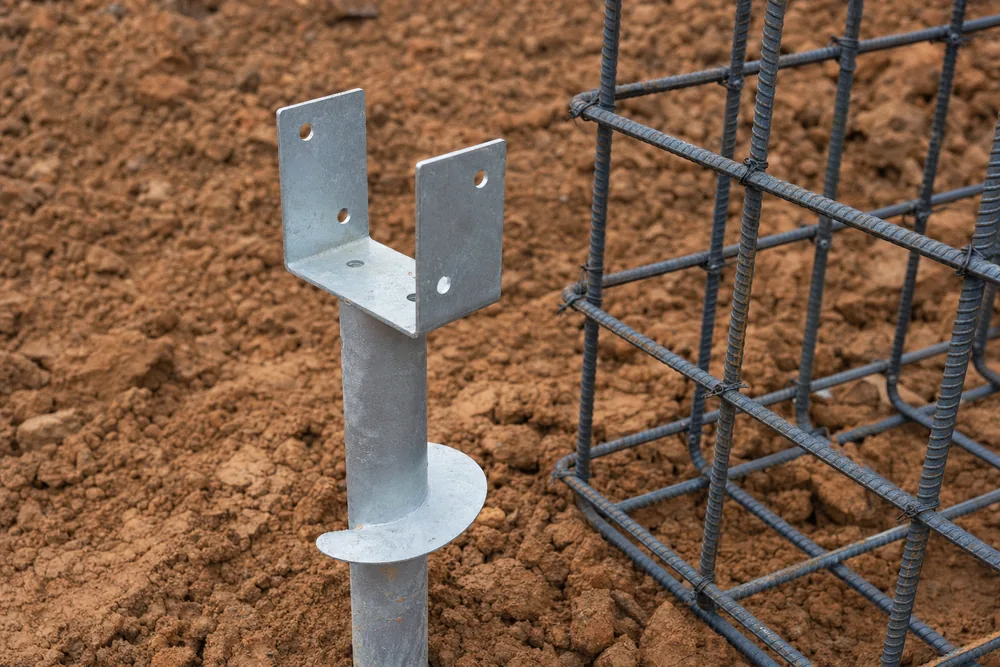
How screw piers compare to stumps
They're most often used as an underpinning method where the existing footing has failed, or as new structural support where a traditional dug footing isn't practical — on reactive or soft ground, or where excavation would undermine an adjoining structure. Depth and pier spec are an engineering decision established by testing the specific site: CSIRO says soil classification, from A for stable sand and rock to E for extremely reactive, is generally provided by a geotechnical report.
The Queensland Transport and Main Roads study of the Ipswich to Springfield corridor maps brown and grey uniform cracking clays, duplex soils and flat alluvial plains likely to be prone to flooding and water logging, so ground differs from one part of the city to the next. In a flood hazard area, Queensland Development Code MP 3.5 exists so that specified buildings resist flotation, collapse or significant permanent movement caused by flood water; the footing design is the engineer's to show, and the certifier's to accept.
What screw pier installation costs in Ipswich
No contractor price is published for screw piers: pier count and spec depend on engineering and ground conditions. QBCC requires a licence for building work valued over A$3,300, and Ipswich City Council's 2026-27 register lists A$660 to assess underpinning or restumping (read 25 September 2026).
Sources, read 25 September 2026: Ipswich City Council, fees and charges 2026-27; QBCC, foundation work (piling and anchors) licence class; CSIRO, foundation maintenance and footing performance; Business Queensland, construction in flood hazard areas (QDC MP 3.5); Transport and Main Roads, Ipswich to Springfield corridor study, land characteristics.
The fees, thresholds and cost drivers that shape a quote are on the pricing page. A firm price comes from a site visit — call (07) 3524 0616 or use the quote form.
Restumping costs and rules check
Screw Piers in Ipswich — common questions
What's the difference between screw piers and traditional stumps?
Traditional stumps or footings are dug and set in the ground; screw piers are driven in with a hydraulic head, generally faster to install and producing less excavated spoil. Both need engineering sign-off appropriate to the load and ground conditions.
How much do screw piers cost?
No price is published: the number of piers a job needs is an engineering decision based on your site and its soil. The published thresholds are QBCC's licence threshold of A$3,300 and council's A$660 fee to assess underpinning or restumping where it is the certifier.
When are screw piers used instead of stumps?
Most often where an existing footing has failed and needs underpinning, or where ground conditions or nearby structures make a traditional dug footing impractical. A geotechnical assessment on your specific site is what decides this, not the job type alone.
Suburbs we serve
Ready to get your screw pier installation job quoted?
Free quote, one local provider, no obligation.
Last reviewed · Updated · First published